

Savannah’s STR Rules May Violate Federal Law—Could a Legal Challenge Be Next?

A recent legal victory in South Lake Tahoe has overturned a voter-approved short-term rental (STR) ban that favored local residents over out-of-state property owners. This case is sending shockwaves through cities with similar restrictions—including Savannah, where current STR regulations may also violate federal law under the Dormant Commerce Clause.
The South Lake Tahoe Ruling & Its Legal Impact

In a major legal decision, the El Dorado County Superior Court struck down Measure T, a 2018 law that phased out short-term vacation rentals (VHRs) in residential zones—except for local residents. The measure allowed permanent residents to rent their homes for up to 30 days per year, while banning non-residents from renting at all.
Property owners challenged the law, arguing it unfairly discriminated against out-of-state owners. The California Court of Appeal agreed, expressing concerns that the rule violated the Dormant Commerce Clause, which prevents states and cities from favoring their own residents over non-residents in commercial activities. The case was sent back to the lower court, which completely overturned Measure T due to its unconstitutional treatment of non-resident property owners.
Does Savannah’s STR Law Violate the Same Federal Law?
Savannah’s current short-term vacation rental (STVR) permitting system may be on shaky legal ground for the same reasons that doomed South Lake Tahoe’s Measure T.
Right now, Savannah allows homeowners who claim a homestead exemption to obtain a short-term rental permit for any home they own, while making it much harder—if not impossible—for out-of-state owners to do the same. This means Savannah is explicitly favoring local residents over non-resident property owners when it comes to STR permits.
That’s exactly the kind of discrimination against out-of-state owners that was ruled unconstitutional in the South Lake Tahoe case. By giving residents a legal advantage in obtaining rental permits, Savannah’s regulations may be violating the Dormant Commerce Clause—opening the door for a potential lawsuit.
The Legal & Financial Risks for Savannah
If South Lake Tahoe’s case is any indicator, cities that limit STR rights based on residency status don’t hold up in court. If Savannah faces a similar legal challenge, the city could be forced to:
✅ Overturn its STR permitting rules
✅ Reimburse property owners for lost income
✅ Pay significant legal fees & damages
Savannah officials should take this ruling very seriously. If challenged, the city could find itself on the losing end of a costly legal battle—just like South Lake Tahoe.
What Happens Next?
This ruling sends a clear warning to cities like Savannah that enforce STR regulations favoring locals over non-residents. The constitutional rights of property owners—local or not—must be upheld.
Savannah’s policies could be the next target for a legal challenge. The question now is whether city officials will recognize this legal risk and take corrective action—or dig in and fight a battle they may not win.
Stay tuned as this case develops—Savannah’s STR rules could be on the verge of a major legal showdown.
See Full Article Here
FROM OUR BLOG
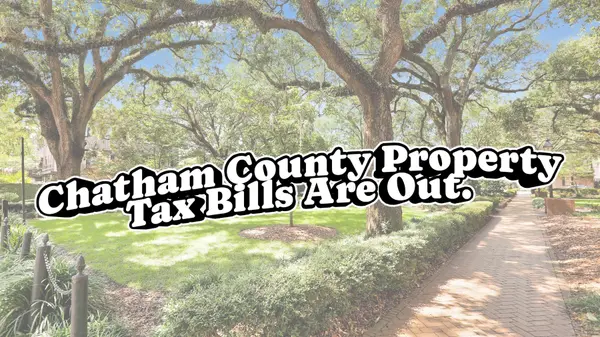
Chatham County Property Taxes: What’s Different on Your 2026 Bill
CHATHAM COUNTY PROPERTY TAX BILLS ARE HERE! If you own property in Chatham County, your second property tax bill for 2026 should be arriving in the mail. The deadline to pay is November 16th. But before you look at the amount due and immediately pay it, TAKE A MINUTE and actually look over your bill
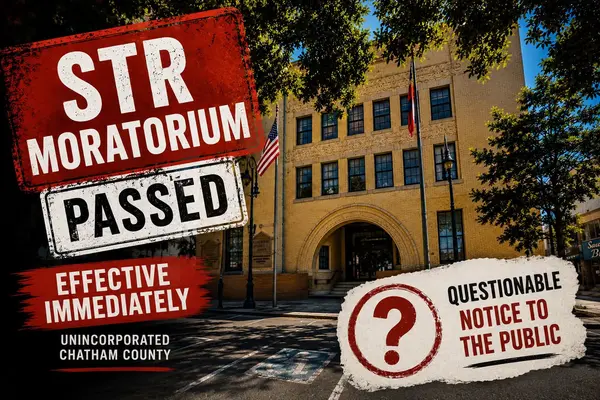
STVR Moratorium in Unincorporated Chatham County
STVR MORATORIUM PASSED! This is for unincorporated Chatham County homes only. It officially passed this morning, Friday, July 10th, 2026, very quickly. Every commissioner voted in favor except Noha. It is effective IMMEDIATELY. Just the mere possibility of a moratorium sparked a rush of STVR app
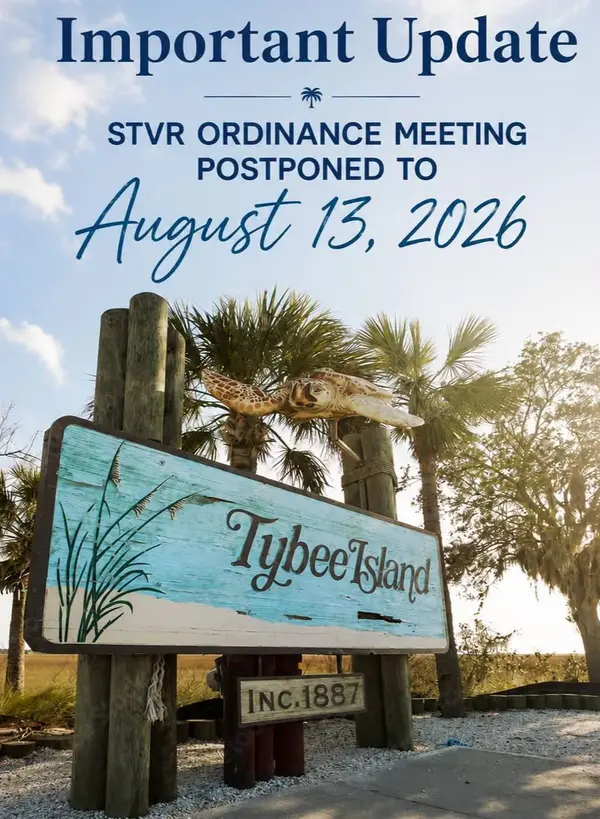
Tybee STR Ordinance Update: Tonight’s Public Hearing Has Been Postponed to August 13, 2026
Many of you planned to attend the Tybee Island City Council meeting on 7/9 for the public hearing on the proposed Short Term Rental (STR) ordinance. Unfortunately, “the required legal advertisement was not published for the full required time” before the meeting, so the public hearing could not le