

Major Legal Victory Overturns Vacation Rental Ban—What This Means for Tybee Island

A major legal ruling out of California has struck down a voter-approved ban on short-term rentals, setting a powerful precedent that could impact Tybee Island’s ongoing legal battle over restrictive rental regulations.
The Case: South Lake Tahoe’s Measure T Overturned

In a decision that will have ripple effects across the country, the El Dorado County Superior Court recently overturned Measure T, a 2018 voter-approved initiative that phased out vacation rentals in residential zones within South Lake Tahoe.
Measure T banned vacation home rentals (VHRs) in residential areas while allowing them in commercial and tourist zones. It also contained an exception: permanent residents were allowed to rent their properties short-term for up to 30 days a year, while non-residents were entirely barred from doing so.
A property owners’ group challenged this rule, arguing it violated constitutional property rights and discriminated against non-resident owners. The California Court of Appeal previously expressed concerns over this unequal treatment, specifically citing potential violations of the dormant Commerce Clause—a constitutional principle that prevents states and cities from favoring their own residents over out-of-state property owners.
After further review, the lower court found this exception unconstitutional and inseparable from the measure itself, leading to the complete invalidation of Measure T.
Why This Matters for Tybee Island
This case is a huge development for property rights advocates and those fighting against unfair short-term rental restrictions nationwide. It directly relates to the legal challenge against Tybee Island’s restrictive STR ordinances, which disproportionately impact non-resident property owners while benefiting a select few.
Just like in South Lake Tahoe, Tybee’s rental restrictions have stripped property owners of their rights and created an unfair divide. The Lake Tahoe ruling confirms what many of us have been saying all along—when local governments violate constitutional protections, they lose in court. And when they lose, they lose big.
The Legal & Financial Consequences for Cities
South Lake Tahoe may now face potential lawsuits from property owners seeking damages for lost rental income and financial harm caused by the overturned restrictions. Tybee Island officials should take note: fighting against property rights comes with serious legal and financial consequences.
This ruling is more than just a win for property owners—it’s a warning to cities attempting to impose similar restrictions. When the courts weigh in on these unconstitutional regulations, the result is often clear: the cities lose, and property rights are restored.
What Happens Next?
Tybee Island’s ongoing lawsuit is now more relevant than ever. The South Lake Tahoe case proves that these battles take time, but in the end, property rights and constitutional protections win the day.
If you support property rights and fair laws, now is the time to pay attention. The legal precedent is stacking up in favor of STR owners, and Tybee Island could be next in line for a major victory.
Stay tuned for updates—this fight is far from over!
See Full Article Here
FROM OUR BLOG
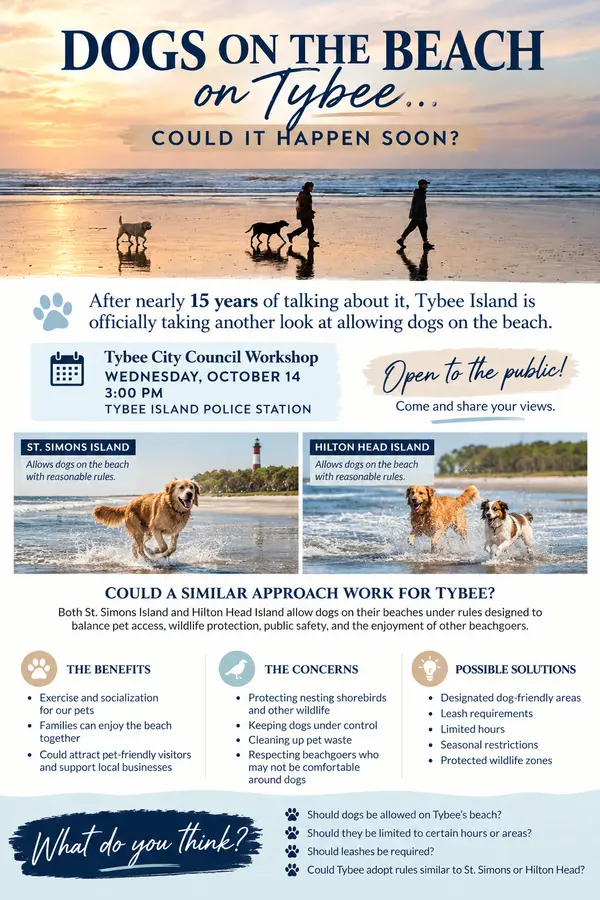
Chatham County Property Taxes: What’s Different on Your 2026 Bill
CHATHAM COUNTY PROPERTY TAX BILLS ARE HERE! If you own property in Chatham County, your second property tax bill for 2026 should be arriving in the mail. The deadline to pay is November 16th. But before you look at the amount due and immediately pay it, TAKE A MINUTE and actually look over your bill
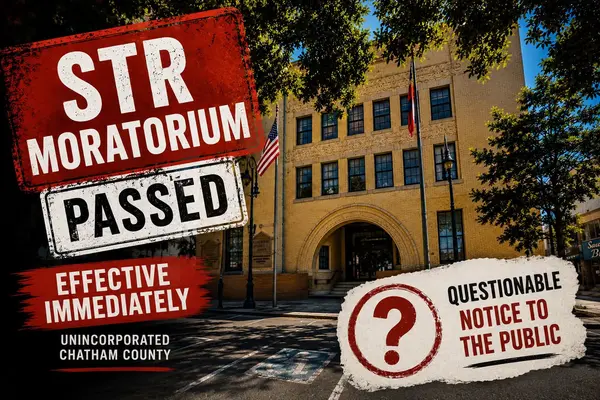
STVR Moratorium in Unincorporated Chatham County
STVR MORATORIUM PASSED! This is for unincorporated Chatham County homes only. It officially passed this morning, Friday, July 10th, 2026, very quickly. Every commissioner voted in favor except Noha. It is effective IMMEDIATELY. Just the mere possibility of a moratorium sparked a rush of STVR app
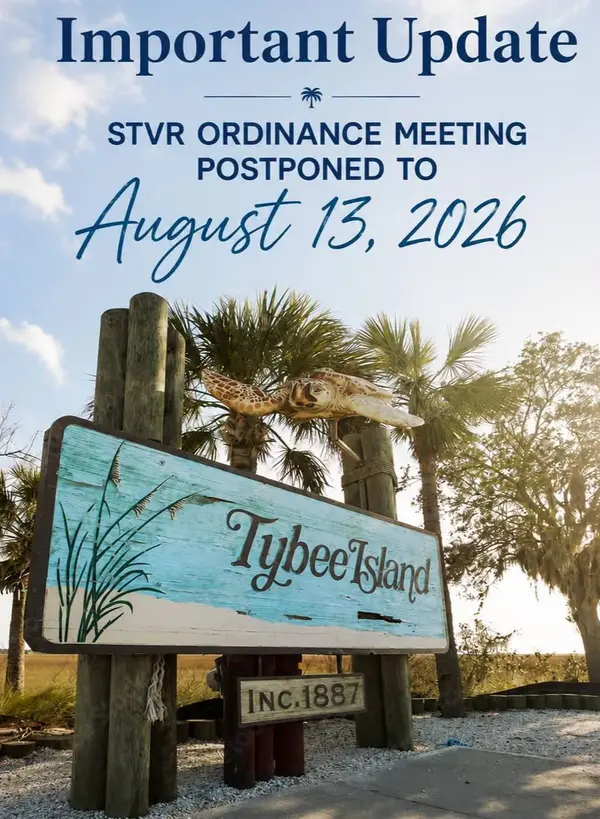
Tybee STR Ordinance Update: Tonight’s Public Hearing Has Been Postponed to August 13, 2026
Many of you planned to attend the Tybee Island City Council meeting on 7/9 for the public hearing on the proposed Short Term Rental (STR) ordinance. Unfortunately, “the required legal advertisement was not published for the full required time” before the meeting, so the public hearing could not le